.png?w=1024&h=259)
Why ROI Matters When Purchasing Pilates Equipment
Commercial Pilates equipment is often the largest capital investment for a new studio. Whether you're purchasing Reformers, Cadillacs, Chairs, or a complete studio package, understanding the financial return helps you:
- Estimate profitability before opening
- Secure financing or investor approval
- Plan future studio expansion
- Optimize pricing strategies
- Reduce financial risk
A high-quality commercial Reformer may cost more upfront, but superior durability, smoother operation, and lower maintenance costs often produce significantly better long-term returns.
.png?w=2048&h=2048)
Step 1: Calculate Your Initial Equipment Investment
Start by determining your total equipment cost.
For example:
| Equipment | Quantity | Unit Cost | Total |
|---|---|---|---|
| Commercial Reformers | 8 | $2,600 | $20,800 |
| Pilates Chairs | 2 | $900 | $1,800 |
| Ladder Barrel | 1 | $1,200 | $1,200 |
| Accessories | - | - | $1,200 |
Total Equipment Investment: $25,000
A complete commercial studio package from Ciga Pilates can help reduce startup costs while maintaining professional-grade quality and performance.
Step 2: Estimate Monthly Revenue Per Reformer
The next step is determining how much income each machine can generate.
Let's assume:
- Group class price: $35
- 8 participants per class
- 4 classes per day
- 26 operating days per month
Monthly revenue:
$35 × 8 clients × 4 classes × 26 days
= $29,120/month
This represents gross revenue generated by your Reformers.
Step 3: Estimate Monthly Operating Costs
Typical monthly expenses include:
- Instructor payroll
- Studio rent
- Utilities
- Insurance
- Marketing
- Software subscriptions
- Equipment maintenance
Example:
| Expense | Monthly Cost |
| Rent | $4,000 |
| Payroll | $8,500 |
| Marketing | $1,000 |
| Utilities | $500 |
| Miscellaneous | $1,000 |
Total Monthly Expenses: $15,000
Step 4: Calculate Monthly Profit Contribution
Monthly Revenue:
$29,120
Minus Monthly Expenses:
$15,000
Net Operating Profit:
$14,120/month
Step 5: Calculate Equipment Payback Period
Formula:
Payback Period = Equipment Investment ÷ Monthly Profit
Example:
$25,000 ÷ $14,120
= 1.77 months
In this scenario, the equipment investment could theoretically be recovered in less than two months.
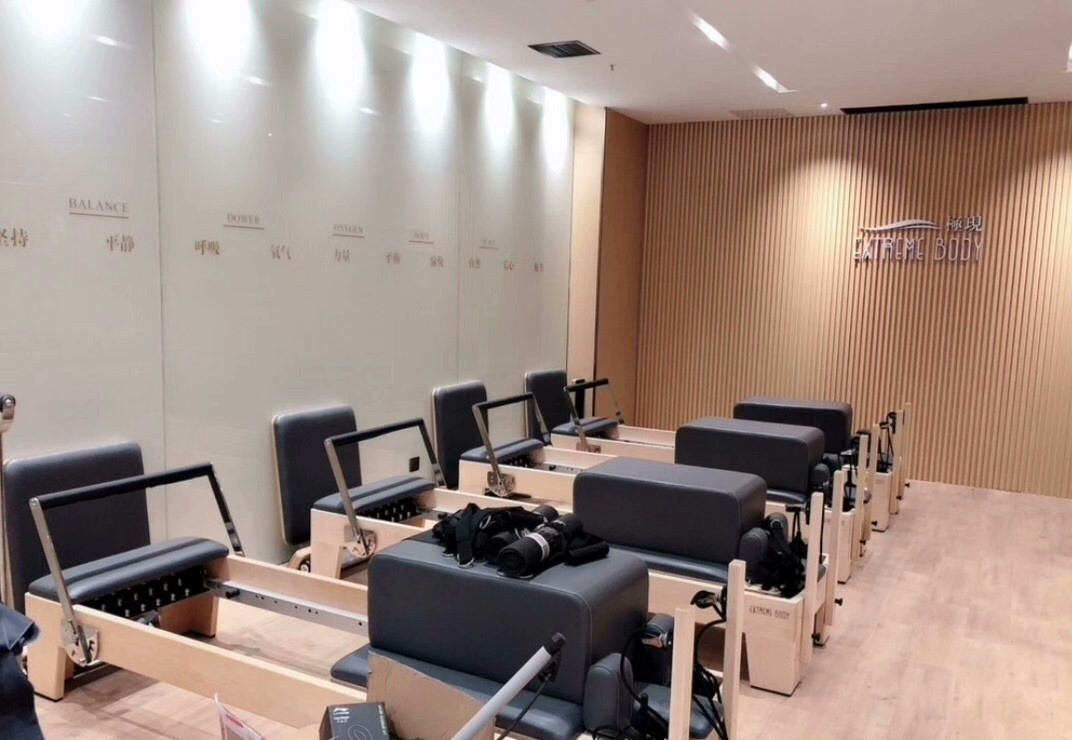
Most Pilates studios operate at lower occupancy during the launch phase, so a more realistic commercial payback period is typically:
- Conservative Scenario: 12–18 months
- Average Scenario: 8–12 months
- High-Demand Studio: 6–9 months
Actual results depend on utilization rates, membership retention, and local market demand.
Occupancy Rate: The Hidden ROI Driver
The biggest factor affecting equipment ROI is not equipment cost.
It's utilization.
Consider an 8-Reformer studio:
| Occupancy Rate | Monthly Revenue Potential |
| 40% | Moderate |
| 60% | Strong |
| 80% | Excellent |
| 90%+ | Premium Market Performance |
Improving occupancy often has a greater impact on profitability than reducing equipment costs.
This is why successful studios focus heavily on:
- Introductory offers
- Membership programs
- Client retention
- Instructor quality
- Community building
Why Commercial-Grade Equipment Produces Better ROI
Some studio owners focus solely on purchase price.
However, lower-cost equipment often creates hidden costs:
- Increased maintenance
- More downtime
- Shorter lifespan
- Lower client satisfaction
- Reduced resale value
Commercial-grade equipment is designed for continuous daily use and can deliver years of reliable service in busy studio environments. Ciga Pilates commercial Reformers are built specifically for studios, wellness centers, rehabilitation facilities, hotels, and fitness clubs requiring durable professional equipment.
Sample ROI Comparison
| Option | Low-Cost Equipment | Commercial Equipment |
| Initial Cost | $18,000 | $25,000 |
| Expected Lifespan | 4 Years | 8+ Years |
| Annual Maintenance | High | Low |
| Client Experience | Average | Premium |
| Long-Term ROI | Lower | Higher |
A higher-quality investment frequently produces a lower total cost of ownership over the equipment lifecycle.
Final Thoughts
Calculating ROI before opening a Pilates studio allows owners to make strategic equipment decisions based on profitability rather than purchase price alone.
When evaluating equipment, focus on:
✓ Durability
✓ Client experience
✓ Utilization potential
✓ Maintenance costs
✓ Long-term business growth
The right commercial Pilates equipment is not simply an expense—it is a revenue-generating asset that can contribute to studio profitability for many years.
If you're planning a new Pilates studio, expanding an existing location, or upgrading equipment, obtaining a detailed commercial quote can help you build an accurate ROI forecast tailored to your business model.
Contact Ciga Pilates
Looking for professional commercial Pilates equipment?
Ciga Pilates provides studio-grade Reformers, Cadillacs, Chairs, Barrels, and complete studio packages for Pilates businesses worldwide.
Email: alecia@cigapilates.com
WhatsApp: +1 502 547 6005